High in the hills, at about a thousand metres, the town where the diamond rush was born keeps a listed historic centre, cool nights and a cemetery that looks like a miniature city.
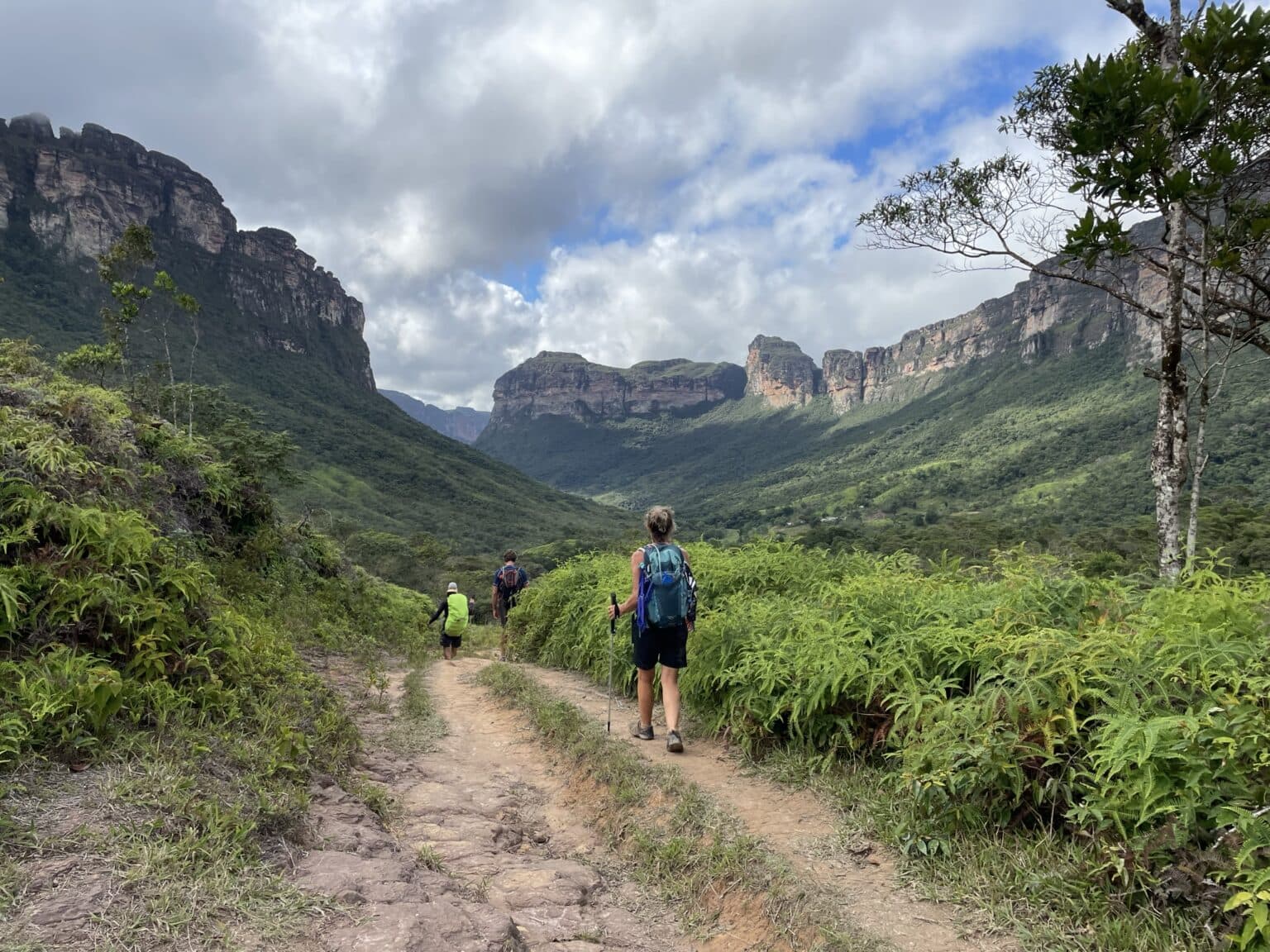
Mucugê sits high in the Serra do Sincorá, at about 1,000 metres, in the south of the Chapada Diamantina National Park. Lençóis and Andaraí lie at the foot of the range, outside the park; Mucugê, as Roy Funch writes, is "settled" up on top. The climate is cooler than in the rest of the Chapada, with cold nights, especially in winter.
It was in the river that now bears the town’s name that, in 1844, the diamonds that started the Chapada rush turned up. From here mining spread to Igatu, Andaraí and Lençóis. Today the old core, listed by IPHAN, is a small cluster of streets, alleys and lanes, surrounded by waterfalls, the Paraguaçu canyon and the fields where the sempre-viva flower grows.
1844
diamonds in the Mucugê River: the Chapada rush begins
~1,000 m
above sea level — the coolest nights in the Chapada
270 ha
of the Mucugê Municipal Park, created in 1999
600 m
is how far the Paraguaçu drops between Mucugê and Andaraí, in ~20 km
Where the rush began.
Mucugê was not the first find in Bahia. In the 18th century, Jacobina and Rio de Contas were already gold towns, and by 1732 the Crown knew of diamonds near Jacobina but kept it quiet: the flood of stones from Serro Frio, in Minas Gerais, had cut prices by 75%, and diamond mining outside Minas was only allowed from 1832. In 1817 or 1818 diamonds turned up in the Gagau range, west of the Sincorá, and around 1822 the naturalists Spix and Martius recorded that the region held diamonds — both finds were hushed up by the local authorities.
In 1844, the merchant José Pereira do Prado was on his way to Andaraí to buy manioc flour when he noticed that the Santa Isabel stream, where the Cumbuca River flows in, had the same gravel as the diamond diggings of the Chapada Velha. At the first wash, his godson Cristiano Nascimento found two diamonds of about 4 carats and another of just over 1. The two kept it secret until a companion, Pedro Ferreiro, went to sell some 108 carats in the Chapada Velha, was taken for a buyer’s murderer and, to clear himself, revealed where the stones came from. This is the version recorded by the historian Walfrido Moraes.
Soon hundreds, then thousands, of people rushed to the "new mines" — many of them from Rio de Contas, whose gold had run out around 1800. From the Mucugê River, mining spread south to Barra da Estiva and Rio de Contas, and north, creating Xique-Xique (now Igatu), Andaraí and Lençóis, as far as Morro do Chapéu. That is how the region now called the Chapada Diamantina took shape — and the founding dates of the villages follow their distance from Mucugê, as the miners pushed across the range.
The settlement was called Santa Isabel do Paraguaçu and then São João do Paraguaçu before taking the name of the mucugê, a small tree with pink flowers and edible fruit. Today it is endangered, and it is hard to find one near the town it named.
Wealth also brought disease. In 1855 cholera came up from Salvador, and chronicles speak of hundreds dead in Mucugê. According to tradition, that is how the cemetery on the slope of the Serra do Cruzeiro began — and in the decades of prosperity it gained the monumental tombs everyone now calls Byzantine.
When diamonds lost their value, Mucugê shrank: in the early 1970s the town had fewer than 400 residents. The turnaround came from the surrounding plateau. Around 1980, farmers from southern Brazil bought cheap land on the uplands to grow wheat; the rains changed, the wheat failed, and potatoes, carrots, onions and coffee irrigated by centre pivots took over. The plateau between Mucugê and Ibicoara became one of Bahia’s biggest farming hubs, and the water at the headwaters of the Paraguaçu — contested by irrigators, traditional communities and those living downstream — is still debated today.
In 1985 the Chapada Diamantina National Park was created, with Mucugê among the municipalities in the area. The town’s old houses were preserved, and Mucugê became a base for the south of the Chapada: the Paraguaçu canyon, the waterfalls of the Municipal Park, Igatu and, via its district of Guiné, the Pati Valley.
The flower that never wilts.
The Mucugê sempre-viva ("everlasting", Syngonanthus mucugensis) is a small flower of the upland fields that does not wilt once picked. That made it a sought-after decoration and, after the end of mining, the income of many families in Mucugê and Igatu.
The harvest nearly wiped it out. Pickers burned the fields after gathering and picked before the seeds fell, and the plant vanished from several ranges. IBAMA began to crack down on the harvest, and in 1996 the state government created the Sempre-Viva Project to study and protect the species.
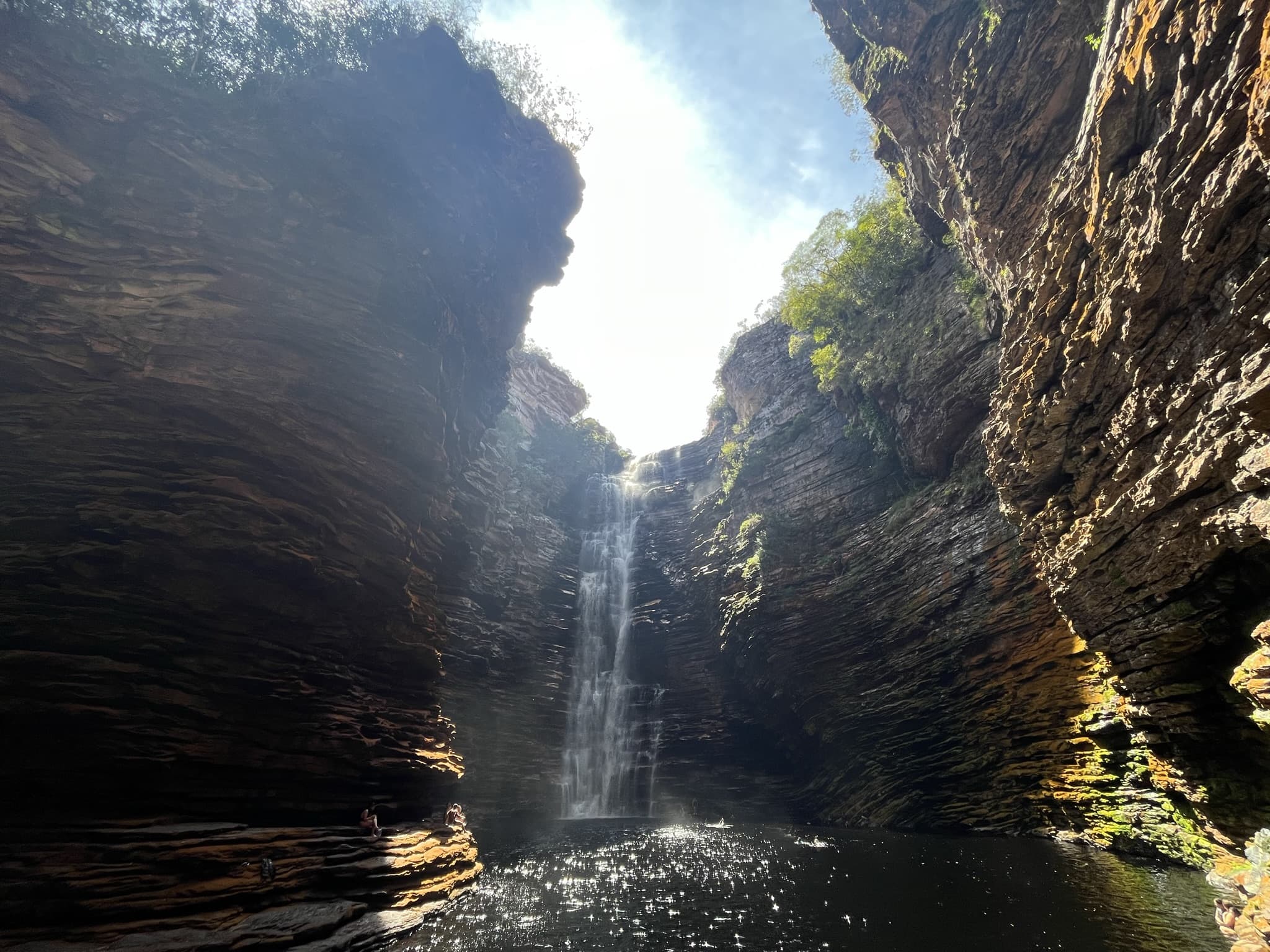
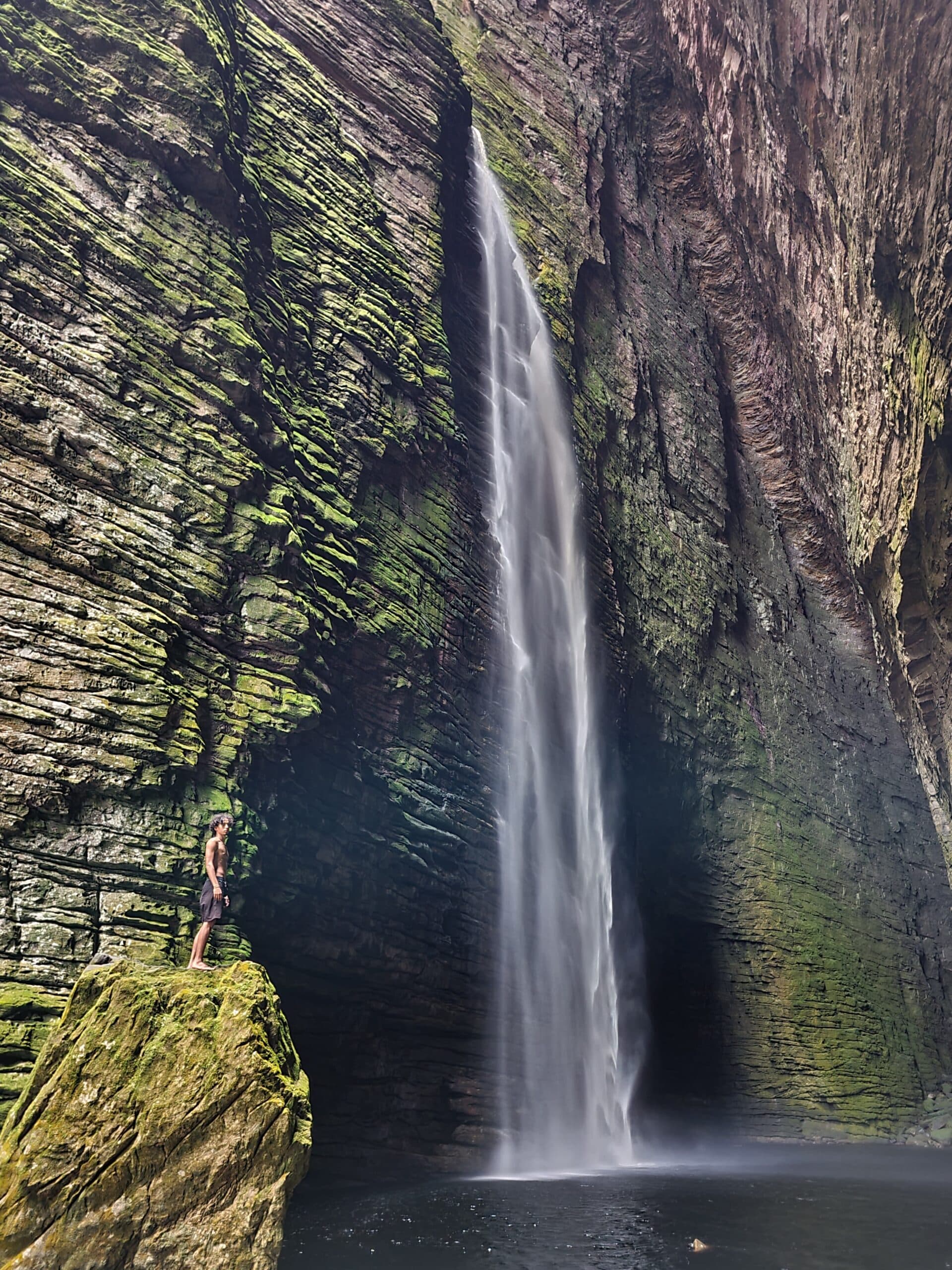
In 1999 the project gave rise to the Mucugê Municipal Park, with 270 hectares, a laboratory and a visitor centre. Inside it is the Tiburtino waterfall, on the Cumbuca River, which tumbles down in steps — its pool is traditionally called "Zé Leandro".
Culture and traditions.
Byzantine Cemetery
The Santa Isabel Cemetery covers the slope of the Serra do Cruzeiro with tombs and crypts in every style. From afar it looks like "a little city of the dead", as Roy Funch puts it. A trail of about 30 minutes climbs to the Cruzeiro, with a view over the town.
Listed historic centre
The old core, listed by IPHAN, is made of half a dozen streets, alleys and lanes laid out long before cars. It is a town to explore on foot, slowly, in the cool mountain air.
Santa Rita dos Impossíveis
In the early 20th century, Mucugê built a power plant on the Paraguaçu that "everyone said was impossible". When it was finished, the little church of Santa Rita dos Impossíveis ("of the Impossible") was raised next to it. The spot, the Poção da Usina, became a swimming hole.
The Pati mule trains
For over a century, the Pati Valley fed the diggings: every week, trains of donkeys left loaded with coffee, manioc flour, rice and fruit for the markets of Andaraí, Guiné and Mucugê. Part of the valley, the Ruinha, still belongs to the municipality.
Curiosities.
The mucugê, the tree that named the town, was first described by science in the Amazon, in Pará, in the 1860s. Today it is rare in Mucugê itself.
José Pereira do Prado was known as Cazuza do Prado. And tradition says the first diamond turned up on a feast day: 24 June 1844, the Festa de São João.
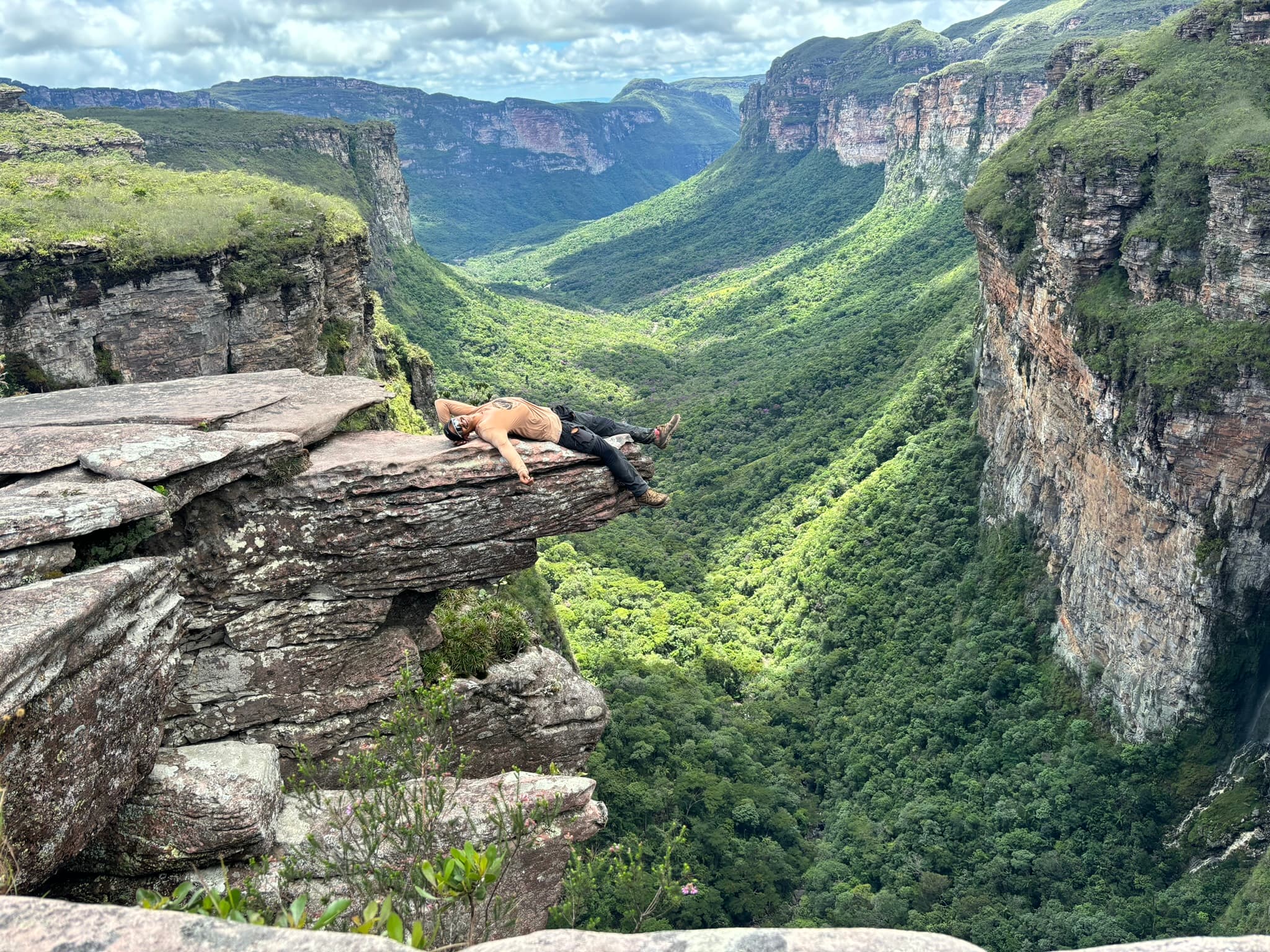
The Paraguaçu River rises near the Fazenda Molhada, in Barra da Estiva, some 60 km south of Mucugê, flows north and enters the range through a fault. Between Mucugê and its mouth near Andaraí, over about 20 km, it drops 600 metres.
North of town, a stretch of the Paraguaçu canyon is called Sibéria — the name may come from the cold at the bottom of the valley.
At the Poço Redondo, where the Rio Preto flows in, you can see the dark water of the Preto meeting the clear water of the Paraguaçu.
In 1923, Colonel Horácio de Matos, the strongman of Lençóis, married Augusta, daughter of Colonel Douca Medrado of Mucugê — a political alliance between the two ends of the Lavras.
Between Lençóis, Andaraí and Mucugê, according to Roy Funch, "there is not a metre of ground" that has not been dug for diamonds.
Notable people.
José Pereira do Prado
discovery of 1844
A merchant who, on his way to Andaraí, recognised in the Santa Isabel stream the gravel of the Chapada Velha diggings. The discovery attributed to him started the Chapada diamond rush.
Cristiano Nascimento
discovery of 1844
José Pereira do Prado’s godson, who found the first diamonds of the Mucugê River at the first wash — two of about 4 carats and one of just over 1.
Near Mucugê.
Tours leaving from Guiné, a district of Mucugê and the western gate of the Pati Valley, and from the Ibicoara area, to the south.
Mucugê is a good base for the south of the Chapada: Igatu, the Paraguaçu canyon, the Municipal Park and, via Guiné, the Pati Valley. The guesthouses are in the historic centre and around it — and with the cool mountain nights, bring a warm layer.
Coming soonComing soon: Mamut’s partner guesthouses in Mucugê.
Where to eat in Mucugê.
The town is small and the evenings are quiet: the restaurants are in the historic centre, a few steps from one another.
Coming soonComing soon: Mamut’s partner restaurants in Mucugê.
Shops and services in Mucugê.
In the centre there are small shops with crafts and local produce — coffee from the surrounding plateau makes a good gift to take home.
Coming soonComing soon: Mamut’s partner shops and services in Mucugê.
Run a business in Mucugê?
Guesthouses, hotels, restaurants and shops that look after our travellers well can join this list. Get in touch.