Jarê
An Afro-Brazilian religion born in the mining camps of the Chapada Diamantina, blending elements of Candomblé, popular Catholicism and Indigenous traditions. It is one of the most distinctive cultural expressions of the region.
The gateway to the Chapada Diamantina is a town born of diamond mining — and its stone streets still hold the memory of the diamonds.
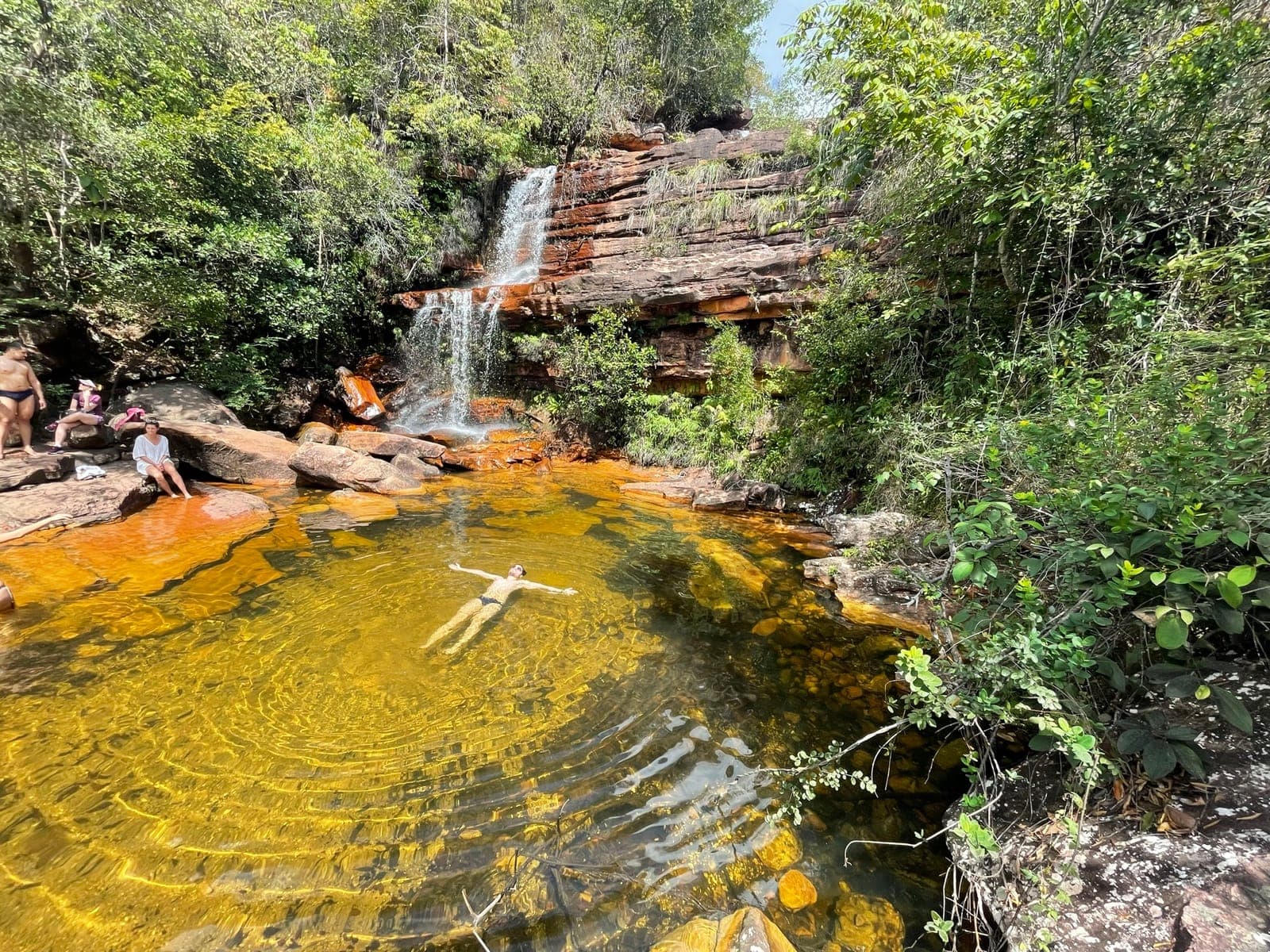
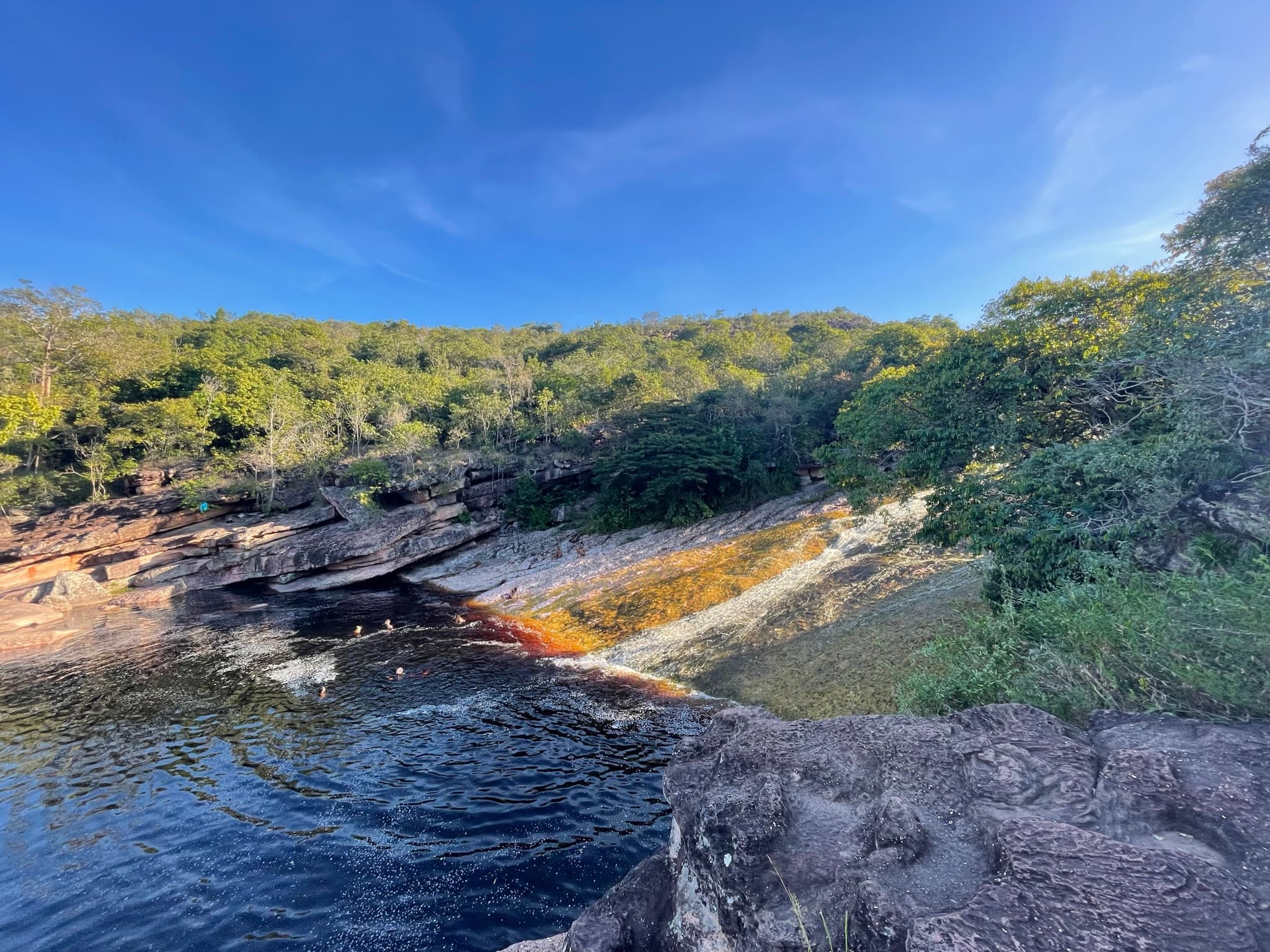
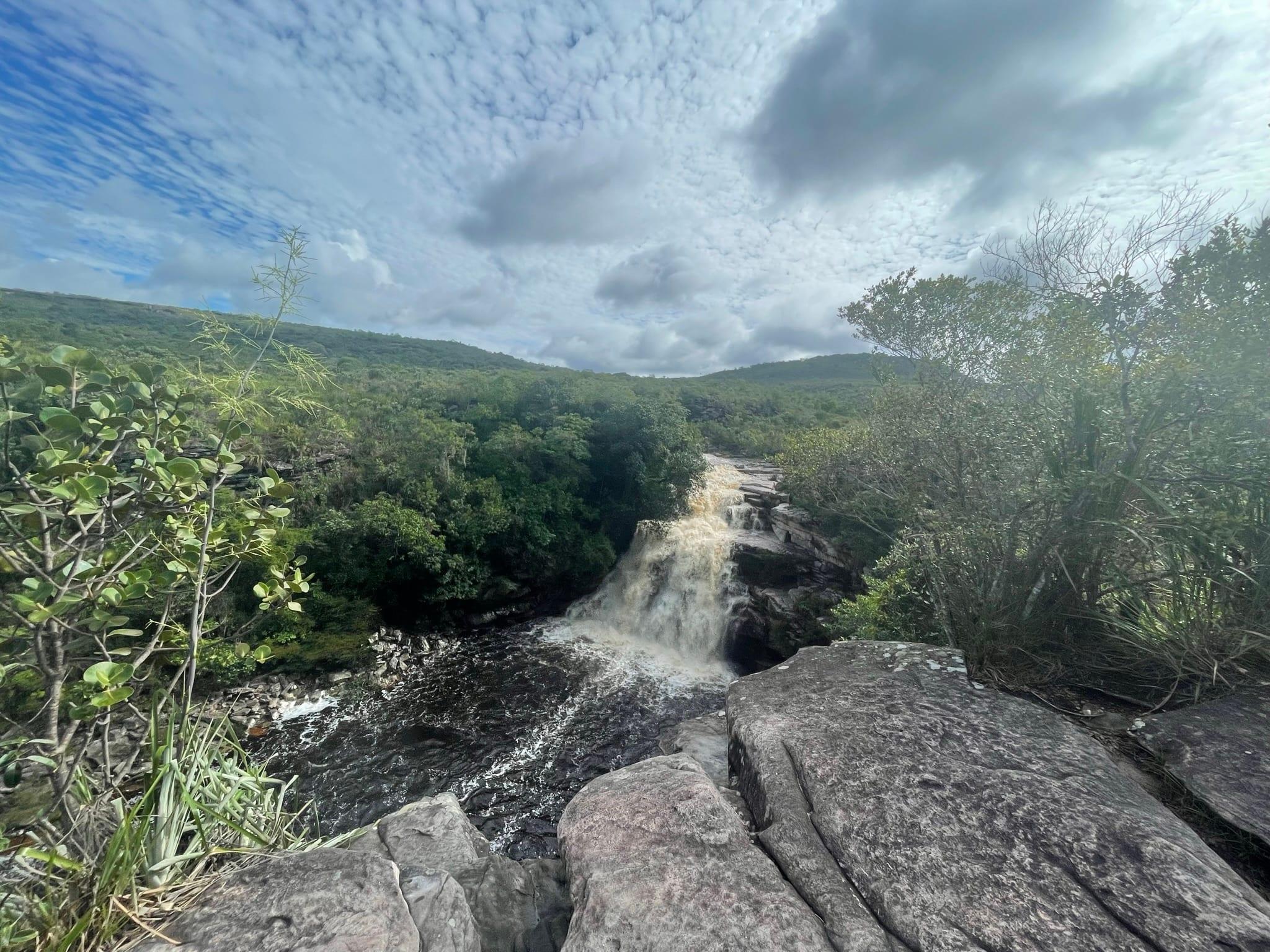
Lençóis sits in the heart of the Chapada Diamantina, on the banks of the river that gives it its name, about 420 km from Salvador. It is the base for most trips in the region: this is where the trails to the Pati Valley, Fumaça Waterfall, Pai Inácio Hill and dozens of waterfalls, pools and caves begin.
But the town is worth it in its own right. The colourful colonial houses, the streets paved with river stones and the squares hold almost two centuries of history — from the diamond rush, when stones from here went on to Amsterdam and Paris, to its rebirth through ecotourism.
The Chapada’s diamonds were not born here. Diamonds form more than 150 km underground and usually reach the surface through kimberlite pipes — and none has ever been found in the Chapada. The stones here were carried by rivers more than a billion years old and got trapped in the conglomerate of the Tombador Formation, the same rock as the walls of Pai Inácio and the Pati Valley. Where they came from, nobody knows for sure. And with no mine to dig deeper, what was in the rock was all there was.
In 1844 the trader José Pereira do Prado and his godson Cristiano Nascimento found diamonds in the gravel of the Mucugê river, and within a few years thousands of people crossed the backlands on foot and by mule — from Minas Gerais, the Recôncavo, Portugal and France. On the banks of the Lençóis river a camp became a village: the white tents scattered over the slope looked like sheets — lençóis — spread out in the sun, which, tradition says, gave the town its name. By around 1850 there was a church and shops, and the stones went down the range to the port of Cachoeira and on, through Salvador, to Amsterdam and Paris. Lençóis became a vila in 1856 and a town in 1864.
The sandstone, though, gave almost no food: flour, dried meat and raw sugar came from far away, by mule. And in 1867 diamonds were found in southern Africa — near Kimberley there appeared exactly the pipe the Chapada never had, and supply exploded. Prices collapsed, European buyers dropped the small Bahian stones and Lençóis lost much of its population within a few years.
What kept the region going was a stone the miners used to throw back into the river: carbonado, the black diamond. Opaque and worthless as a gem, it does not shatter — and it became the tip of the drill bits boring tunnels, wells and mines around the world. In any quantity it only exists in the Chapada Diamantina and the Central African Republic. It is said that enslaved miners handed these stones to buyers as curiosities, in exchange for cigars. Once industry discovered carbonado, a carat came to be worth up to twenty times one of ordinary diamond — and that money armed the Chapada’s colonels.
The end came from a laboratory. In 1954 General Electric made the first synthetic diamond, and within twenty years industry swapped carbonado for factory diamond. In the 1960s and 70s Lençóis hit bottom, with mansions shut and townhouses collapsing. In the 1980s came the dredges, tearing up riverbeds for the last of the gravel — until in 1985 the Chapada Diamantina National Park was created and, in the 1990s, mechanised mining was banned for good.
Its rebirth came from the same rock. Since the 1980s backpackers have been arriving who want the landscape, not diamonds — and the historic centre of Lençóis, listed by IPHAN in 1973, came back to life. The miner became a guide, the mansion became a guesthouse, and many of today’s guides lead travellers along the same trails their parents and grandparents opened in search of stones.
In Brazil’s First Republic, the Bahian backlands were in practice ruled by the coronéis: big landowners and political bosses who controlled land, votes, posts and armed men. The State was little more than a rumour from Salvador. In the Lavras Diamantinas, power came from mining — and, in the early 20th century, from carbonado, worth more than gold. In Lençóis, politics was armed from the start: from the very first election, the "serranos", miners from Tijuco in Minas Gerais, and the "baianos", merchants from the Recôncavo, fought over the town with daggers and hired guns.
The greatest of them was Horácio de Queiroz Matos, born in 1882 in Chapada Velha to a family of backland political bosses, and he made Lençóis his capital. Whoever controlled the mines controlled real money, and real money bought weapons: Horácio built a private army of gunmen and kept gathering towns, allies and enemies.
In 1919 and 1920, in the fight over who would govern Bahia next, Horácio and other backland colonels took up arms against the capital. It was a real war, with sieges, dead and captured towns, and Horácio came to control a stretch of the backlands larger than the state of Sergipe. In the end the federal government stepped in and peace was signed in Lençóis: the Lençóis Agreement left a private citizen with his weapons and the right to appoint officials in the region. Horácio became known as the "Governor of the Sertão".
In 1926 it was the federal government that asked for help. The Prestes Column, a march of rebel soldiers crossing the country, entered Bahia, and Horácio formed the Patriotic Battalions to chase it through the backlands until it left Brazil for Bolivia. It was the peak: Lençóis had a telegraph, electric light and an elite with weight in Salvador’s politics.
His power ended with the 1930 Revolution. An ally of the old order, Horácio was arrested by Getúlio Vargas’s government and taken to Salvador. Released on 13 May 1931, he was murdered two days later, far from the mountains. With him ended the age of the Chapada’s colonels — and a few decades later, synthetic diamond would finish off the carbonado that had funded that power.
An Afro-Brazilian religion born in the mining camps of the Chapada Diamantina, blending elements of Candomblé, popular Catholicism and Indigenous traditions. It is one of the most distinctive cultural expressions of the region.
Senhor dos Passos is the patron saint of the miners, and his festival, between late January and early February, is the town’s most traditional: a procession, the washing of the church steps, music and packed streets.
The region’s many-coloured sands — like those of the Coloured Sands Hall — are turned into pictures inside glass bottles, built up grain by grain. It is Lençóis’s most typical craft.
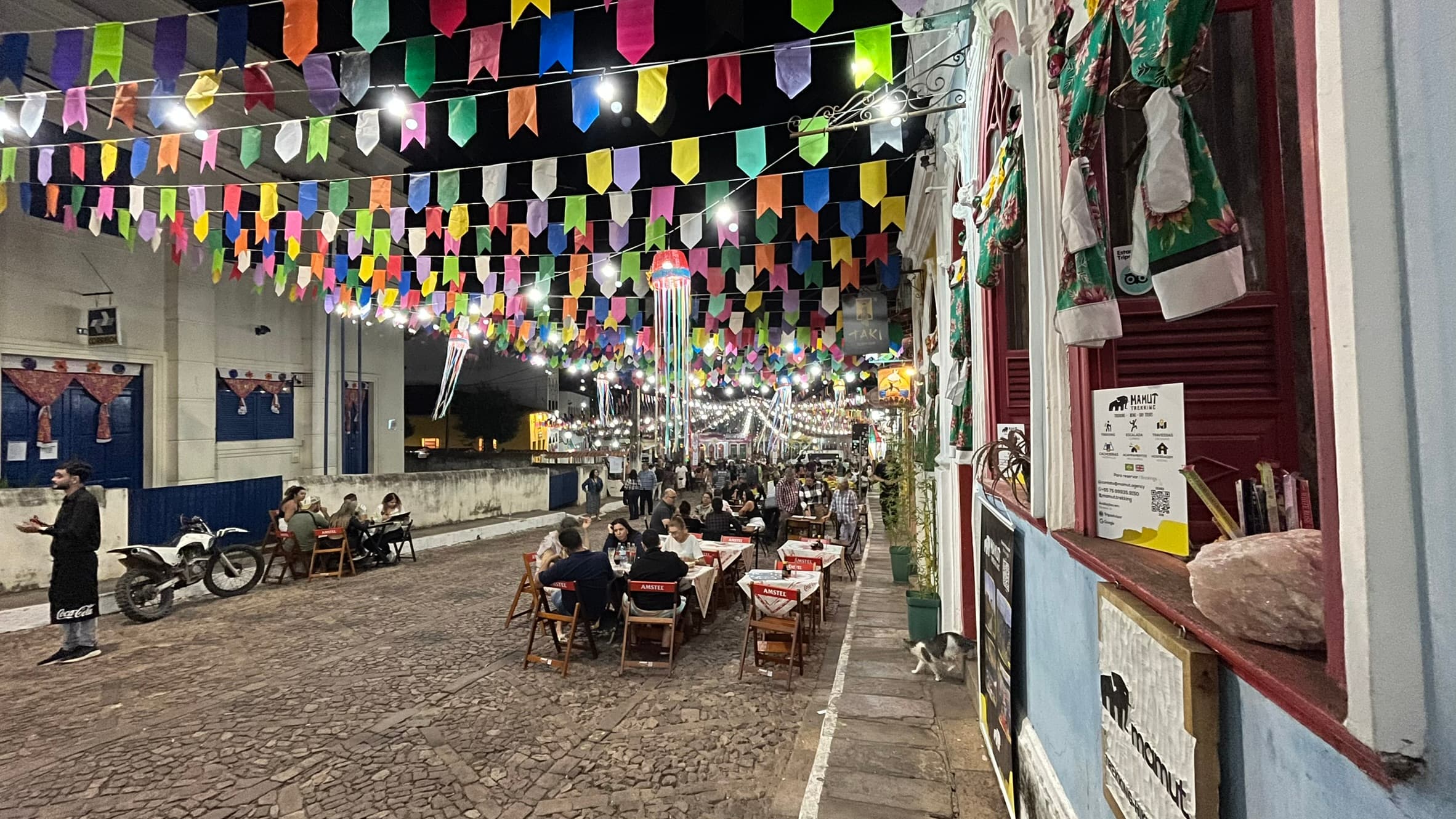
At night the old street paved with river stones fills with tables, music and restaurants serving regional and international food. It is where everyone back from the trails meets up.
Mining left a vocabulary you still hear in town: a "faísca" is a one-day dig to try your luck; a "serviço" is the working face; a "capangueiro" is a diamond buyer; the "fornecedor" fed and equipped the miner in exchange for half the stones; and the "dono da serra", the landowner, still takes "um quinto" — a fifth — of the larger finds.
In the Serra das Paridas, near Lençóis, lies the largest group of rock paintings open to visitors in the Chapada: 18 sites with hundreds of drawings — from deer less than three centimetres tall to large human and geometric figures — painted with iron oxide, manganese, white clay and charcoal.
1876–1947
Doctor, writer and member of the Brazilian Academy of Letters, born in Lençóis. His novel "Maria Bonita" is set in the region, and a memorial to him stands on the square of the Rosário Church — an important and also controversial figure.
1882–1931
Born in Chapada Velha in 1882 and master of Lençóis, he was the most powerful colonel of the Lavras Diamantinas, backed by carbonado money. In 1920 he took up arms against the Bahia government, in a war that only ended with federal intervention and the Lençóis Agreement. In 1926 he chased the Prestes Column at the head of the Patriotic Battalions. Arrested after the 1930 Revolution, he was murdered in Salvador in 1931, two days after his release. Lençóis’s main square and the town’s airport bear his name.
Some of the trips that begin in town or a few kilometres from it.
Guesthouses, hotels, restaurants and shops we recommend for your stay.
Guesthouses, hotels, restaurants and shops that look after our travellers well can join this list. Get in touch.
Get in touch — we answer with the right itinerary for your group.